
Published February 3, 2026
What to Expect When Buying a House in BC

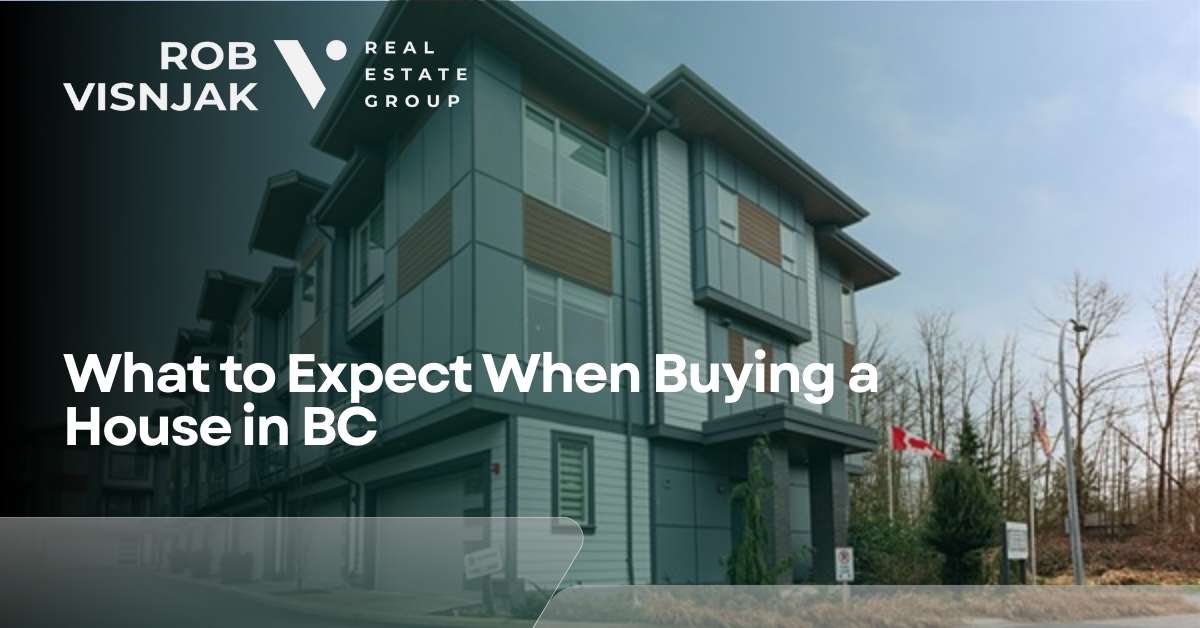
Buying a house in British Columbia is an exciting milestone, but it involves a unique process with specific requirements, costs, and timelines that differ from other provinces. Understanding what to expect when buying a house in BC is essential to navigating the journey confidently and avoiding costly surprises. From BC's Property Transfer Tax to subject clauses and the role of notaries, the province has distinct procedures that buyers must understand before making one of life's biggest financial decisions.
At the Rob Visnjak Real Estate Group, we guide buyers through the BC home buying process every day throughout the Fraser Valley. Whether you're a first-time buyer or experienced homeowner, BC's real estate market in 2026 presents a more balanced environment than recent years, with increased inventory giving buyers more time and choice in their purchase decisions. The intense pressure of previous years has eased, creating opportunities for thoughtful buyers who understand the process.
This comprehensive guide walks you through everything you can expect when buying a house in British Columbia. From financial preparation and mortgage pre-approval to making offers with subject clauses, conducting inspections, and completing the transaction with a notary or lawyer, we cover each step of BC's unique home buying journey. Whether you're considering properties in Langley, Surrey, or elsewhere in the Fraser Valley, this guide provides the knowledge you need to navigate BC's real estate market successfully.
Key Takeaways
-
Subject Clauses Protect You: BC uses subject clauses (conditions) that allow you to back out if financing, inspection, or other conditions aren't met.
-
Property Transfer Tax Required: BC charges Property Transfer Tax on all purchases, though first-time buyers may qualify for exemption.
-
Notaries Handle Closing: In BC, either a notary public or lawyer can handle your real estate transaction.
-
Typical Timeline: From offer to possession typically takes 30-60 days in BC.
-
Deposits Around 5%: Most BC purchase agreements require a deposit of approximately 5% of the purchase price.
Prepare Your Finances and Get Pre-Approved
Before you start house hunting in BC, get your finances in order and secure mortgage pre-approval. A mortgage pre-approval in 2025-2026 is not just a suggestion—it's a critical tool for anyone serious about buying a home in BC. This isn't a quick online estimate but a lender-verified confirmation of how much you can borrow.

Pre-approval focuses your search on properties you can realistically afford and signals to sellers that you are a qualified and serious buyer, giving your offer more weight in competitive situations. Many BC mortgage brokers are proactive and will have you complete all paperwork before you even make an offer, streamlining the process once you find the right property.
You'll need to provide proof of income, employment letter, credit check results, and proof of down payment (typically bank statements showing you have the funds). Many Canadian banks have newcomer mortgage programs that consider international credit history or offer more flexibility if you have a larger down payment of 35% or more, which can be helpful for recent immigrants to BC.
Understand the 2026 BC Housing Market
With your finances in order, understand the environment you're entering. The BC housing market in 2026 presents a different picture than in previous years. The intense pressure has eased, creating a more balanced climate that benefits thoughtful buyers. The BC Real Estate Association notes that slower sales have led to an increase in property listings, giving buyers more choice.
This increase in available homes across Metro Vancouver and the Fraser Valley is perhaps the most significant advantage for buyers right now. Instead of rushed decisions, you have more time to find a property that truly fits your needs. The BCREA also anticipates continued price stabilization, which provides more room for negotiation than the heated market of recent years.
BC remains Canada's most expensive housing market, so affordability remains a key consideration influenced by interest rates. However, the overall trend is one of stabilization rather than rapid price increases. For those focused on specific communities, staying current with local trends is vital, as different Fraser Valley neighborhoods experience different market dynamics.
Find the Right Real Estate Agent
Working with an experienced BC real estate agent is crucial to successfully navigating the province's unique market. Your agent helps you identify properties that match your criteria, provides detailed market analysis and neighbourhood insights, arranges viewings and coordinates schedules, explains BC-specific processes like subject clauses, and guides you through offer preparation and negotiation.
Choose an agent who specializes in your target area—whether Langley, Surrey, or other Fraser Valley communities—and has recent experience with buyers in similar situations to yours. Good agents will communicate your needs and budget clearly, then provide a curated list of available listings rather than overwhelming you with unsuitable options.
Understanding the home buying process from an experienced agent's perspective helps you appreciate the steps ahead and make informed decisions throughout your journey.
Search for Properties and Attend Viewings
Once pre-approved and working with an agent, begin viewing properties that match your criteria. In today's BC market with increased inventory, you have more time to be selective rather than rushing into decisions. Focus on properties that meet your needs regarding location, size, condition, proximity to work and amenities, school catchments if applicable, and potential for future value appreciation.
During viewings, look beyond surface-level appeal to assess the home's actual condition, layout functionality, natural light, storage space, and any visible maintenance issues. Homes that hold value aren't always the biggest—they're the ones that live well. Downtown and urban buyers pay a premium for layouts that feel functional: a proper entry, separated bedrooms, a real dining space, and a den that can actually be used.
Take notes and photos (with permission) to help you remember properties, especially if viewing multiple homes. Don't hesitate to schedule second viewings for properties you're seriously considering—seeing a home at different times of day provides valuable perspective.
Make an Offer with Subject Clauses
When you find a property you want to purchase, your agent helps you prepare a Contract of Purchase and Sale (the offer). In BC, this legally binding document includes the offer price, deposit amount (usually 5% of the purchase price), subject conditions that must be satisfied, closing date, possession date, and included items like appliances and window coverings.

Subject clauses (also called conditions or contingencies) are one of BC's most important buyer protections. Common subject clauses include subject to financing approval (typically 3-7 days), subject to satisfactory home inspection (typically 3-7 days), subject to review of strata documents for condos, subject to sale of buyer's existing home, and subject to lawyer or notary review.
The purchase price is important, but not the only factor sellers consider. Sometimes, a lower offer with better terms wins over higher offers with complications. Your agent guides you on competitive pricing based on comparable sales and market conditions in your specific BC neighbourhood.
Provide the Deposit
Once you've found your ideal home and the seller accepts your offer, you'll need to provide a deposit to secure the property. In BC, the deposit amount is negotiated as part of the purchase contract, but most buyers put down around 5% of the purchase price. This deposit is held in trust by the seller's brokerage or by a lawyer/notary until closing.
The deposit demonstrates your serious commitment to the purchase and becomes part of your down payment at closing. For example, if you're buying an $800,000 home in Surrey with a 20% down payment ($160,000 total), you might provide a $40,000 deposit (5%) when the offer is accepted, then pay the remaining $120,000 at closing.
If you fail to remove subjects within the specified timeline or choose to back out while subjects are still in place, you typically get your deposit back. However, if you back out after removing subjects without legal grounds, you may forfeit your deposit.
Remove Subject Clauses
After your offer is accepted, you enter the subject removal period—typically 3-7 days in BC, though this varies by agreement. During this time, you must satisfy all subject conditions including securing final mortgage approval, conducting a professional home inspection, reviewing strata documents if applicable, and completing any other specified conditions.
The home inspection is particularly crucial. Hire a qualified BC home inspector to thoroughly examine the property's condition including structural integrity, roof condition, electrical and plumbing systems, heating and cooling systems, foundation, and potential moisture or pest issues. The inspection report helps you identify problems and either renegotiate, request repairs, or walk away if issues are too severe.
Once you're satisfied with all conditions, you formally remove subjects, making the contract firm and legally binding. At this point, backing out without legitimate legal grounds means you'll likely lose your deposit and could face legal action for breach of contract.
Finalize Mortgage and Insurance
With subjects removed, finalize your mortgage details with your lender. Provide any additional documentation requested, review and sign mortgage documents, confirm closing date and fund disbursement details, and lock in your interest rate if you haven't already.
Arrange home insurance before closing—most lenders require proof of insurance as a condition of funding. Shop around for competitive rates and ensure coverage is adequate for your property value and contents. In BC, you'll also need to ensure you're not purchasing in a high-risk fire zone, as this can affect insurance availability and cost.
Work with a Notary or Lawyer
In British Columbia, either a notary public or real estate lawyer can handle your transaction closing. This is different from some provinces where only lawyers can perform these services. Your notary or lawyer conducts a title search to ensure clear ownership, reviews the Contract of Purchase and Sale, calculates and arranges payment of Property Transfer Tax, prepares closing documents, registers the property transfer with the Land Title Office, and disburses funds on closing day.
First-time homebuyers in BC should inform their notary or lawyer about potential exemptions from Property Transfer Tax. BC offers the First-Time Home Buyers' Program which provides full or partial exemption from PTT for eligible buyers purchasing their first home.
Understand BC-Specific Costs
Buying a home in BC involves several costs beyond the purchase price and down payment. The BC Property Transfer Tax is a significant cost: 1% on the first $200,000, 2% on the portion between $200,000 and $2 million, 3% on the portion between $2 million and $3 million, and 5% on the portion above $3 million. First-time buyers may qualify for full or partial exemption.

Other costs include the home inspection ($400-$600), notary or lawyer fees ($1,000-$2,000), home insurance (varies by property and coverage), property appraisal if required by lender ($300-$500), and moving costs. Budget an additional 2-4% of the purchase price for closing costs beyond your down payment.
If you're purchasing a new home for your primary residence, you may qualify for an enhanced GST rebate effective May 27, 2025: 100% GST rebate on homes priced up to $1 million, partial rebate on homes priced between $1 million and $1.5 million. This applies if neither you nor your spouse owns a home in the last 4 years.
Complete the Final Walk-Through
A few days before closing, conduct a final walk-through of the property with your agent. This ensures the property is in the agreed-upon condition, all included items are present (appliances, fixtures, etc.), any agreed repairs have been completed, and there's no new damage since your last viewing.
If you discover problems during the final walk-through, contact your notary or lawyer immediately. Depending on the severity, you may be able to delay closing until issues are resolved or negotiate a credit at closing.
Close the Transaction and Take Possession
On the closing date specified in your purchase agreement, several things happen. Your notary or lawyer registers the property transfer at the Land Title Office, your lender releases mortgage funds, you provide the balance of your down payment and closing costs, the Property Transfer Tax is paid, and the seller receives the proceeds. This typically happens in the morning on closing day.
The possession date may be the same as closing or a different date specified in your agreement. On possession day, you receive the keys and can take physical possession of your new BC home. The seller must vacate by the agreed-upon time (often noon or 6 PM).
Typically, you'll have around two months between offer acceptance and closing in BC. During this time, you can handle other housing arrangements: give your landlord notice of vacating, arrange for movers, notify utilities of your new address, and purchase appliances well in advance of the move-in date.
Frequently Asked Questions (FAQ)
1. How long does it take to buy a house in BC?
From accepted offer to possession typically takes 30-60 days, though the timeline can vary based on your agreement and how quickly subjects are removed.
2. What is the BC Property Transfer Tax?
A provincial tax on all property purchases: 1% on first $200,000, 2% on $200K-$2M, 3% on $2M-$3M, and 5% above $3M. First-time buyers may qualify for exemption.
3. What are subject clauses in BC real estate?
Conditions that must be satisfied before the purchase becomes binding, such as financing approval and home inspection. They protect buyers by allowing them to back out if conditions aren't met.
4. How much deposit do I need in BC?
Typically around 5% of the purchase price, though this is negotiable. The deposit becomes part of your down payment at closing.
5. Can a notary handle my real estate purchase in BC?
Yes, in BC either a notary public or lawyer can handle residential real estate transactions.
6. What is the First-Time Home Buyers' Program in BC?
A program that provides full or partial exemption from Property Transfer Tax for eligible first-time buyers purchasing qualifying homes.
7. Do I need a home inspection in BC?
While not legally required, a home inspection is highly recommended and typically included as a subject clause to protect your interests.
8. What happens if I can't remove subjects in time?
If you can't satisfy subject conditions within the specified timeline, you can typically back out of the purchase and get your deposit back.
Conclusion
Buying a house in British Columbia involves a unique process with specific requirements including subject clauses, Property Transfer Tax, and notary involvement that distinguish it from other provinces. By understanding what to expect at each stage—from financial preparation and pre-approval to making offers with protective conditions, conducting thorough inspections, and completing the transaction through a notary or lawyer—you can navigate BC's real estate market with confidence. The 2026 market offers more balance and choice than recent years, creating opportunities for prepared buyers who understand the process.
The Rob Visnjak Real Estate Group has guided countless buyers through BC's home buying process throughout the Fraser Valley. Our experience with local market conditions, BC-specific requirements, and current inventory helps buyers make informed decisions and achieve successful outcomes. If you're ready to buy a house in Langley, Surrey, or elsewhere in British Columbia, we invite you to connect with us today. Let us guide you through every step of BC's home buying journey with expertise and personalized service.

Rob Visnjak Personal Real Estate Corp
Team Lead | ROB VISNJAK REAL ESTATE GROUP
or another way