
Published January 6, 2026
How to Buy an Investment Property in Langley BC: Beginner’s Guide

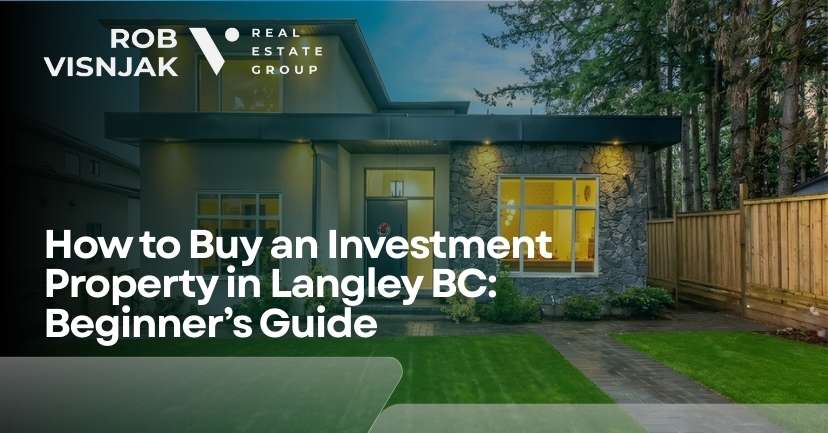
Buying your first investment property in Langley can be one of the most rewarding financial decisions you make, but it requires careful planning, strategy, and preparation specific to British Columbia's market. Understanding how to buy an investment property properly in Langley is essential to building wealth through real estate while avoiding costly mistakes that can derail your financial goals. Real estate investment ranks among the safest investment types and can provide both steady rental income and long-term capital appreciation when approached strategically, especially in Langley's growing Fraser Valley market.
At the Rob Visnjak Real Estate Group, we work with both homebuyers and investors throughout the Fraser Valley. While purchasing an investment property differs significantly from buying a primary residence, the fundamentals of market analysis, property evaluation, and strategic decision-making remain critical. Investment properties require a more analytical approach focused on return on investment (ROI), cash flow, and long-term appreciation rather than emotional factors that influence personal home purchases. Langley's position as one of BC's fastest-growing communities makes it particularly attractive for real estate investors.
This comprehensive beginner's guide will walk you through every essential step of purchasing your first investment property in Langley. From defining your investment goals and securing BC financing to analyzing potential properties in Langley's diverse neighborhoods and managing your investment, we cover the knowledge you need to make informed decisions. Whether you're considering rental properties in Walnut Grove, Willoughby, Brookswood, or Fort Langley, these principles will help you build a solid foundation for real estate investment success in the Fraser Valley.
Key Takeaways
-
Langley Offers Strong Growth: Infrastructure projects like the SkyTrain extension are driving property values and rental demand.
-
Secure Proper BC Financing: Investment property loans require 20-25% down payments and meet stricter Canadian lending criteria.
-
Analyze the Numbers: Langley's average rent of $2,100 supports positive cash flow on well-chosen properties.
-
Research Langley Markets: Focus on neighborhoods with transit access, schools, and growth potential.
-
Start Small: Begin with manageable properties like single-family homes in stable Langley neighborhoods.
Define Your Investment Goals
Before you start searching for properties in Langley, get clear on what you want to achieve with your investment. Are you aiming to earn monthly rental income for passive cash flow, planning to hold the property for long-term appreciation as Langley grows, or looking to build a diversified real estate portfolio in the Fraser Valley? Your answer will shape the property type, location, and financing option you choose.

Successful investors typically allocate 15-25% of their total portfolio into real estate investments. Consider which investment strategy aligns with your financial situation and goals. Income generation focuses on properties that bring in steady rental income exceeding expenses—important in Langley where average rents reach $2,100 monthly. Capital appreciation involves finding properties in emerging Langley neighborhoods with strong growth potential tied to infrastructure development. Portfolio diversification means mixing different real estate assets to spread risk across the Fraser Valley.
Your investment timeline also matters significantly. Short-term investors might focus on properties in rapidly appreciating Langley areas near the future SkyTrain stations. Long-term investors typically prioritize stable rental income in established neighborhoods like Walnut Grove or Willoughby and gradual appreciation. Understanding your goals upfront prevents costly mistakes and helps you evaluate Langley properties objectively rather than emotionally.
Understand Why Langley is Attracting Investors
Langley is quickly becoming one of British Columbia's most promising real estate markets, offering incredible opportunities for both new and seasoned investors. With its blend of urban convenience and suburban charm, Langley is poised for significant growth in 2025 and beyond. The Fraser Valley region, including Langley, is no longer an under-the-radar opportunity—it's a hot spot attracting national and international real estate investors.
Langley's economy is expanding rapidly, fueled by business development, infrastructure projects, and a steady rise in population. With more people choosing Langley for its affordability compared to Vancouver, the demand for housing is soaring. This means investors can expect strong rental demand and property appreciation over the coming years. Major infrastructure projects, like the Surrey-Langley SkyTrain extension, will further connect Langley to the Greater Vancouver area, increasing property desirability and values.
The rental market in Langley shows robust demand with average rents of $2,100 across all property types. The region provides a stable investment landscape with diverse property options ranging from affordable condos to single-family homes. Langley blends suburban charm with access to transit and future development plans, making it one of the few places where investors can still buy at fair prices and watch properties appreciate as infrastructure expands.
Assess Your Financial Readiness
Determining your financial readiness is crucial before investing in Langley real estate. Just like building a home needs a solid foundation, successful real estate investing requires a solid base of financial preparation. Start by reviewing your current financial position including credit score, existing debt, available capital for down payment and reserves, and income stability.
Check your credit score, as Canadian lenders typically require higher scores for investment properties (usually 680-700+). Review your debt-to-income ratio (DTI)—many lenders want this below 42-44% for investment properties in BC. Add up your monthly debt payments and divide by your gross monthly income to calculate your DTI. If it's too high, work on paying down debt before applying for investment property financing.
Save an emergency fund separate from your down payment. Sudden financial challenges shouldn't force you to sell your Langley investment property at a loss. Build up sufficient cash reserves to cover at least six months of property expenses including mortgage, taxes, insurance, and maintenance. This financial cushion protects you during vacancy periods or unexpected repairs in the Fraser Valley market.
Understand BC Investment Property Financing
Investment property loans in British Columbia work differently than primary residence mortgages and typically come with stricter requirements. Lenders view investment properties as higher risk, so they impose stricter eligibility criteria including higher down payment requirements (typically 20-25%), lower loan-to-value ratios (often 75-80% LTV), higher interest rates than primary residence rates, and more stringent credit requirements.
In British Columbia, lenders typically require a down payment of at least 20% for rental properties. This is due to the higher risk associated with investment properties compared to primary residences. For properties up to $500,000, you need 5% down if it's owner-occupied, but investment properties require 20% minimum regardless of price. Interest rates on rental property mortgages tend to be higher than those for primary residences because investment properties carry more risk for lenders.
There are several financing options available for BC investors including conventional mortgages requiring a minimum of 20% down payment with competitive rates, portfolio lenders that provide more flexible terms looking at your entire portfolio, and private lenders for those who may not qualify for conventional financing (typically requiring 25% down). Many Canadian lenders allow projected rental income to count toward your qualification, but only a portion (usually 50-75%) is factored in when evaluating your application.
Research Langley's Target Neighborhoods
One of the key factors in successful real estate investing in Langley is choosing the right neighborhood. Market research is essential for identifying areas with growth potential. Look for Langley areas with strong job growth and economic development, population growth and housing demand, proximity to the Surrey-Langley SkyTrain extension, quality schools and family amenities, and increasing property values.

Understanding Langley's local rental market before investing is vital. Research average rent prices for your target property type—knowing that Langley's average rent is $2,100 gives you an idea of what kind of return on investment you can expect. If you can collect monthly rent around the same as or higher than the median rent price in Langley, chances are it's a good investment opportunity.
Focus on neighborhoods strategically positioned for growth. Willoughby and Walnut Grove offer newer developments with strong family appeal and schools. Brookswood provides established single-family home neighborhoods with rental demand. Clayton and areas near the future SkyTrain stations represent high-growth potential. Fort Langley offers unique character properties with heritage appeal. Working with a Langley-focused real estate agent familiar with investment properties can provide valuable neighborhood-specific insights.
Determine Your Buy Box for Langley Properties
Determine your buy box before actively searching for Langley properties. While condos might be popular in some Fraser Valley areas and single-family homes in others, determine the property type you want to invest in based on your market research. Figure out what features you want, like the number of bedrooms, bathrooms, and square footage, and compare similar properties within your desired Langley neighborhoods to find the best fit for your preferences.
Start with single-family homes in stable Langley neighborhoods if you're a beginner. Single-family rental properties are typically easier to finance, manage, and sell than multi-family properties. They also tend to attract longer-term tenants, reducing turnover costs. Langley's suburban character makes single-family homes particularly attractive to families seeking rentals. As you gain experience and build equity, you can expand to townhomes in Clayton or condos in emerging areas.
Your buy box should include specific investment metrics thresholds such as minimum cash-on-cash return (typically 6-8%), target cap rate for Langley properties, acceptable price range based on your financing, and required property condition. Having clear criteria prevents you from wasting time on properties that don't meet your investment goals and helps you act quickly when the right Langley opportunity appears.
Analyze Langley Investment Properties Thoroughly
Never buy a Langley investment property based on emotion or surface-level appeal. Every investment decision should be based on detailed financial analysis. Calculate all costs you'll face, not just the mortgage payment. Verify repairs and ownership costs, Langley property values, and fair market rents using recent comparable sales and rental data from neighborhoods like Willoughby, Walnut Grove, and Brookswood.
Understand that ongoing ownership costs in Langley include not just your mortgage, but also expenses such as property management fees (typically 8-10% of rent), BC property taxes and insurance, maintenance and repairs (budget 1% of property value annually), strata fees if applicable for condos or townhomes, vacancy losses (typically 5-8% of annual rent), and leasing costs. Factor all these expenses into your cash flow projections using Langley's $2,100 average rent as a baseline.
Use key investment metrics to evaluate Langley opportunities including cap rate (net operating income divided by purchase price), cash-on-cash return (annual cash flow divided by total cash invested), gross rent multiplier, and debt service coverage ratio. A fundamental rule: check if rent covers your mortgage plus at least $200-300 minimum for a reasonable margin of safety. Properties that don't generate positive cash flow from day one carry significant risk, even in growing markets like Langley.
Build Your Investment Team
Successful real estate investing in Langley requires a team of BC-licensed professionals. As a beginner, surround yourself with experienced Fraser Valley experts including a real estate agent who specializes in Langley investment properties, a mortgage broker experienced with BC investment financing, a BC real estate lawyer to review contracts and protect your interests, a property inspector familiar with Langley homes, an accountant familiar with Canadian real estate tax strategies, and a property manager if you don't plan to self-manage.

Your agent should understand investment property analysis and help you identify Langley opportunities that meet your buy box criteria. They can provide access to MLS listings with investor-focused filters and proprietary insights about Langley neighborhood trends, rental demand, and growth potential related to the SkyTrain extension and other developments. A good Langley-focused agent will also understand local bylaws and rental regulations.
Don't try to do everything yourself as a beginner in the BC market. The expertise of experienced professionals can save you from costly mistakes specific to British Columbia's legal requirements and help you identify Langley opportunities you might miss. Their fees are typically worthwhile investments that protect your capital and improve your returns in the Fraser Valley.
Make Smart Purchase Decisions
When you find a Langley property that meets your buy box criteria and analysis shows positive returns, it's time to make an offer. Calculate accurately and avoid getting emotional—when you're buying an investment property in Langley, it's about ROI, not personal preferences like paint color or carpeting. Investment real estate is first and foremost about financial returns.
Include appropriate subject clauses in your BC offer including inspection subject, financing subject, appraisal subject, and potentially a rent verification subject if tenants are in place. These protect you if issues arise during due diligence. Have your property inspector conduct a thorough evaluation of the Langley home and use findings to renegotiate if significant problems are discovered.
Review all closing documents carefully with your BC lawyer. Understand exactly what you're buying including any existing tenant leases, property condition, title status, and strata documents if applicable. Make sure you have proper insurance in place before closing, including landlord liability coverage and adequate property coverage for the Fraser Valley. Resources on the home buying process can help you understand the steps involved.
Plan for Property Management
Decide whether you'll self-manage your Langley property or hire a property manager before you close. Self-management saves money but requires time, availability, and landlord skills including tenant screening under BC's Residential Tenancy Act, rent collection, maintenance coordination, and legal compliance. Property managers typically charge 8-10% of monthly rent but handle all operational aspects, making them worthwhile for busy investors or those unfamiliar with BC landlord-tenant laws.
If you self-manage, familiarize yourself with British Columbia's Residential Tenancy Branch regulations, establish clear lease agreements compliant with BC standards, implement thorough tenant screening processes, and create systems for maintenance and rent collection. Good property management protects your Langley investment and maximizes returns in the competitive Fraser Valley rental market.
Start Small and Scale Over Time in Langley
As a beginner, it's wise to start with smaller, manageable investments in Langley and scale up as you gain experience in the BC market. For example, you might begin with a single-family rental property in an established Langley neighborhood to learn the basics of property management, tenant relations, and BC financing. As you build equity and gain confidence, you can expand your portfolio to include townhomes in growth areas, condos near future SkyTrain stations, or properties in other Fraser Valley communities.
Don't rush into multiple Langley properties before you understand the challenges and time requirements specific to BC's market. Learn from your first investment, refine your processes, and then grow strategically. Many successful real estate investors started with just one Langley property and built substantial Fraser Valley portfolios over years through patient, disciplined investing.
Frequently Asked Questions (FAQ)
1. How much money do I need to buy my first investment property in Langley?
Expect to need at least 20-25% down payment plus 6 months of reserves for expenses, totaling 30-35% of the purchase price in BC.
2. What credit score do I need for a BC investment property loan?
Most Canadian lenders require a minimum credit score of 680-700, though higher scores improve your rates and approval odds.
3. What is the average rent in Langley?
The average rent in Langley is $2,100 across all property types, providing solid income potential for investors.
4. Why is Langley a good investment market?
Langley offers strong growth potential driven by the SkyTrain extension, population growth, affordability compared to Vancouver, and robust rental demand.
5. Do I need a property manager for my Langley investment?
Not necessarily, but property managers (8-10% of rent) save time and ensure compliance with BC's Residential Tenancy Act.
6. Can I use rental income to qualify for the mortgage in BC?
Yes, most Canadian lenders allow 50-75% of projected rental income to count toward qualification.
7. What are the best Langley neighborhoods for investment?
Willoughby, Walnut Grove, Brookswood, and areas near the future SkyTrain stations offer strong rental demand and appreciation potential.
8. How much should I budget for maintenance on a Langley property?
Budget approximately 1% of the property value annually for maintenance, plus additional reserves for major repairs.
Conclusion
Buying your first investment property in Langley is an exciting step toward building wealth through Fraser Valley real estate, but success requires careful planning, thorough analysis, and disciplined execution specific to BC's market. By defining clear goals, securing appropriate Canadian financing, researching Langley's growing neighborhoods thoroughly, analyzing properties objectively, and starting with manageable investments, you position yourself for long-term success. Langley's strong growth trajectory, driven by infrastructure development and population increases, makes it an particularly attractive market for beginner investors in 2025.
The Rob Visnjak Real Estate Group works with investors throughout Langley and the Fraser Valley, helping them identify opportunities and navigate the investment property purchase process under BC law. Whether you're considering your first rental property in Walnut Grove, Willoughby, or other Langley neighborhoods, or expanding an existing portfolio, our local market knowledge and experience can help you make informed decisions. If you're ready to explore investment property opportunities in Langley, we invite you to connect with us today. Let us help you build your real estate investment success story in one of BC's fastest-growing communities.

Rob Visnjak Personal Real Estate Corp
Team Lead | ROB VISNJAK REAL ESTATE GROUP
or another way