
Published June 30, 2026
Moving to Langley BC from Another Province

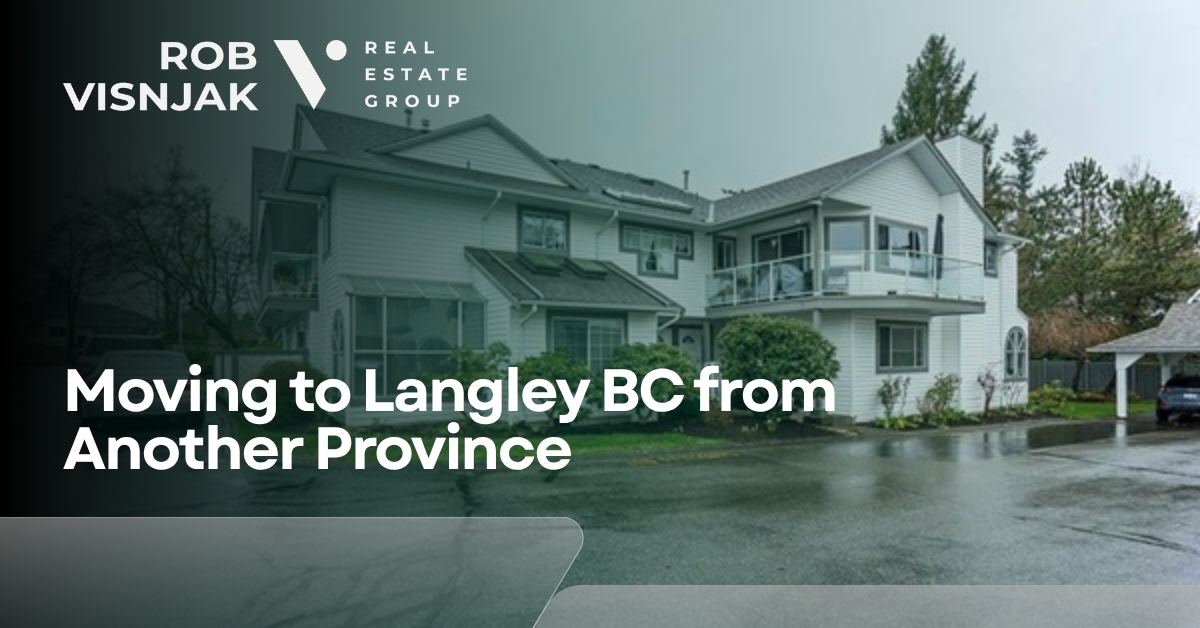
Moving to Langley from another province is straightforward if you plan for housing, transportation, and local services before you arrive. Langley offers more space and newer housing than many parts of Metro Vancouver, but it also comes with car dependency, changing neighborhood profiles, and a market that moves quickly.
The best relocation plan starts with a realistic budget and a clear decision about whether you want a condo, townhouse, or detached home. If you are coming from Alberta, Ontario, Manitoba, or another province, the biggest surprise is usually housing cost, followed closely by commute times and provincial service registration.
What to Expect in Langley
Langley is made up of two distinct areas: the City of Langley and the Township of Langley. Together they offer walkable urban pockets, master-planned suburban communities, and rural properties with acreage, so your experience will vary a lot depending on where you land.
In 2026, Langley remains one of the Fraser Valley’s most attractive relocation destinations because it combines relative affordability with family-friendly neighborhoods and strong future transit prospects. Benchmark pricing in early 2026 put all property types around $963,800, while detached homes averaged roughly $1.52 million, townhomes about $810,300, and condos around $553,000.

Housing Costs and Budget
Housing will be your biggest expense, so it should drive most of your planning. As of 2026, a one-bedroom apartment in Langley city centre is around $2,000 per month, while a three-bedroom rental generally lands between $2,700 and $3,100 depending on condition and location.
If you are buying, first-time buyers may qualify for BC programs that can reduce closing costs and property transfer tax, depending on price and eligibility. For buyers coming from out of province, it is important to confirm whether you are transferring equity from a sale, using savings, or renting first before you purchase.
Best Areas for Newcomers
· Willoughby Heights: Best for families who want newer townhomes, schools, parks, and retail nearby.
· Langley City: Best for buyers who want a more urban setting, lower condo prices, and future SkyTrain access.
· Walnut Grove: Best for established families who want mature streets, recreation, and quick Highway 1 access.
· Murrayville: Best for buyers who prefer a quieter, more traditional neighborhood feel.
· Brookswood: Best for those who want larger lots and a more suburban pace.

Healthcare, Schools, and Services
Before moving, register for provincial healthcare and ensure your documents are ready for any waiting-period rules that may apply after arrival. WelcomeBC’s newcomers guide is a useful starting point for healthcare, transportation, child care, and settlement information.
Families should also research schools early, because housing and school catchments often go hand in hand. If you are moving with children, Langley has a strong reputation for family-oriented neighborhoods, recreation centres, and after-school activities.
Commuting and Transportation
Langley is still largely a driving city, so your commute matters as much as your home purchase. Highway 1 access is a major advantage, but traffic can be heavy during peak hours, especially if you are commuting toward Surrey, Burnaby, or Vancouver.
The Surrey-Langley SkyTrain extension is under construction and is expected to improve access later in the decade. If you are relocating now, buying near future transit corridors may improve convenience and long-term resale value.
Moving Checklist
1. Set your budget and choose whether you will rent first or buy immediately.
2. Research neighborhoods based on commute, school catchment, and property type.
3. Book movers, utility transfers, and insurance before your move date.
4. Register for healthcare, update your driver’s licence, and arrange mail forwarding.
5. Visit homes in person if possible so you understand traffic, noise, and street layout.
Conclusion
Moving to Langley from another province can be a smart long-term move if you want more space, strong community amenities, and a market that still offers options beyond the urban core. The key is matching your budget and lifestyle to the right neighborhood before you sign a lease or make an offer.
If you are planning a move, start with a local home search and a real estate advisor who knows the difference between the City and Township. You can begin by exploring Langley listings or getting personalized help through a consultation.
FAQ
Is Langley cheaper than Vancouver?
Yes. Langley is generally more affordable than Vancouver, especially for detached homes and larger townhomes, though prices have risen steadily in recent years.
Do I need a car in Langley?
Most newcomers do. Langley is still car-dependent for everyday errands and commuting, though transit is improving.
Is Langley good for families?
Yes. Many newcomers choose Langley for its schools, parks, newer homes, and family-focused communities.
Should I rent first before buying?
If you are new to BC, renting first can help you learn neighborhoods before making a purchase, especially if you are moving from another province.

Rob Visnjak Personal Real Estate Corp
Team Lead | ROB VISNJAK REAL ESTATE GROUP
or another way