
Published May 3, 2026
Living in Langley BC: Pros and Cons (2026)

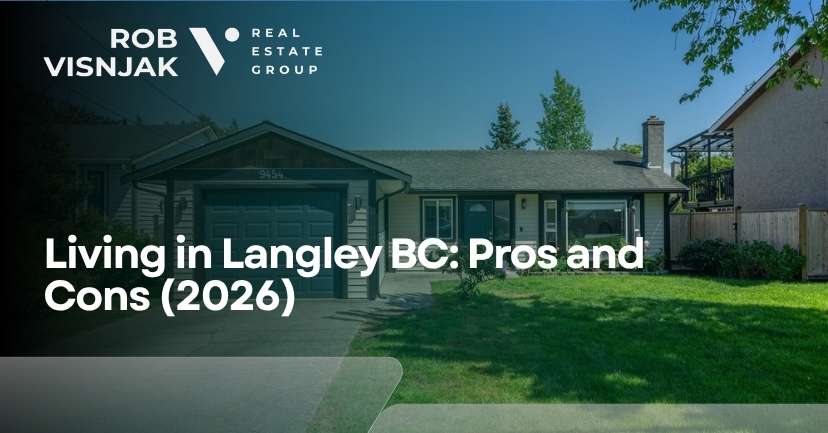
Langley BC is one of the best places to live in the Fraser Valley — and one of the most honestly misunderstood. It offers more space, stronger community ties, and newer housing stock than Vancouver or Burnaby, but it comes with real trade-offs around commute times, car dependency, and rapidly rising costs.
Whether you are a first-time home buyer, an upsizing family, or someone relocating from a larger city, understanding the genuine advantages and disadvantages of Langley life will help you make the right decision for your specific situation.
Quick Snapshot: Living in Langley BC (2026)
|
Category |
Rating |
Notes |
|
Housing Affordability (vs Vancouver) |
Good |
Benchmark home price: $965,600 |
|
Schools and Education |
Excellent |
R.E. Mountain IB program, new additions in 2026 |
|
Outdoor Recreation |
Excellent |
Campbell Valley, Derby Reach, Fort-to-Fort Trail |
|
Transit and Commuting |
Fair |
Car-dependent; SkyTrain arriving 2028/2029 |
|
Traffic Congestion |
Poor |
Highway 1 and 200th Street bottlenecks |
|
Community and Safety |
Very Good |
Strong small-town vibe, family-oriented |
|
Dining and Nightlife |
Good |
Growing fast; not yet a late-night destination |
|
Future Growth Potential |
Excellent |
SkyTrain + 30% inventory growth = buyer opportunity |
The Pros of Living in Langley BC

1. More Space for Your Money
Compared to Vancouver, Richmond, and Burnaby, Langley still delivers significantly more square footage per dollar. As of March 2026, the benchmark home price across all property types in Langley sits at $965,600 — compared to well over $1.2 million in many Burnaby or North Vancouver neighborhoods.
For families who want a proper backyard, a double garage, and a quiet street, Langley remains one of the last realistic options in Metro Vancouver's orbit. A household earning $165,000 or more combined can feasibly purchase a modern townhome and live comfortably without the crushing financial stress common in the inner suburbs.
2. Exceptional Schools and Family Infrastructure
Langley has earned a strong reputation for educational excellence. R.E. Mountain Secondary School in Willoughby offers a prestigious International Baccalaureate (IB) program, one of the most sought-after academic streams in the entire Lower Mainland. In April 2026, the BC government announced a new 300-seat addition to R.E. Mountain to accommodate the rapidly growing population in Willoughby.
Beyond academics, Langley is saturated with family infrastructure. Community recreation centers, youth sports leagues, equestrian facilities, and family-oriented community events make it one of the most livable cities in BC for households raising children.
3. Outstanding Outdoor Recreation
Langley's outdoor lifestyle is a genuine draw that competitors like Surrey or Burnaby simply cannot match. The municipality is home to Campbell Valley Regional Park, the Fort-to-Fort Trail along the Fraser River, Derby Reach Regional Park, and Brookswood's equestrian community.
For those who love hiking, horseback riding, cycling, or simply walking a dog along a quiet river trail, Langley offers an abundance of green space within a 10-minute drive of any neighborhood. Golfers have access to multiple top-rated courses including The Redwoods Golf Course near Fort Langley.
4. Strong Sense of Community
Langley consistently ranks as one of the safest and most tightly-knit communities in the Fraser Valley. Residents frequently describe a genuine small-town feeling that contrasts sharply with the anonymity of Vancouver's denser neighborhoods. Farmers markets, summer festivals, and local community events reinforce this neighborly culture.
Fort Langley itself is routinely cited as one of the premier residential destinations in BC, offering independent boutique shopping, artisan dining, and a historic village atmosphere that larger cities simply cannot replicate.
5. Long-Term Investment Upside (SkyTrain)
The Surrey-Langley SkyTrain Extension (SLSE) is the single largest infrastructure investment in Langley's history. The project will deliver eight new stations along the corridor, with the terminal station landing in Langley City near 203rd Street. According to BC Provincial plans, the project envisions at least 700 new transit-oriented homes and commercial amenities built around each station node.
Buyers who purchase in Langley City or along the 200th Street corridor today are acquiring property at pre-transit prices. Historical SkyTrain-adjacent property data across Metro Vancouver consistently shows 15% to 25% average appreciation within 3 years of a station opening.
The Cons of Living in Langley BC

1. Heavy Car Dependency
The biggest and most consistent complaint from Langley residents is the near-total reliance on personal vehicles. Until the SkyTrain extension opens — projected for 2028 or 2029 — getting around Langley without a car is genuinely difficult. Bus routes exist but are slow, infrequent, and impractical for daily Vancouver commuters.
If you work in downtown Vancouver, expect a commute of 60 to 90 minutes by transit, or 45 to 75 minutes by car depending on traffic. This is a significant daily time investment that impacts quality of life, particularly for households with only one vehicle.
2. Traffic Congestion
Traffic in Langley is a real and daily frustration. Highway 1 through the Langley/Surrey interchange regularly experiences severe congestion during peak hours. The 200th Street corridor, which is the main north-south artery through Willoughby, is notorious for bottlenecks that can add 20 to 30 minutes to short local trips. Even the otherwise charming Fort Langley village experiences significant weekend traffic along Glover Road during summer.
3. Rising Housing Costs
Langley is no longer the bargain it once was. The benchmark detached home price as of March 2026 stands at $1,513,100 — a figure that would have seemed unimaginable a decade ago. While prices have declined approximately 6.9% from peak levels and active listings have surged by more than 30% year-over-year, this is still a substantial entry cost for most buyers.
According to detailed cost-of-living data for 2026, Langley is now feasible but financially tight for a couple earning $155,000 combined who wish to purchase a townhome. Buyers should carefully stress-test their mortgage affordability before committing.
4. Limited Nightlife and Late-Night Amenities
Langley is undeniably a family-first city. If you are a young professional seeking a vibrant bar scene, late-night restaurants, or live entertainment venues, Langley will feel limiting. The dining scene is growing quickly — Langley reportedly has one of the highest restaurant counts per capita in BC — but it skews toward family-friendly and casual options.
For nightlife, most Langley residents drive into Surrey's City Centre or head to Vancouver for a true evening out. This is something potential residents should factor in, especially younger buyers in their 20s and 30s.
5. Growing Pains from Rapid Development
Langley is one of the fastest-growing municipalities in BC, and that growth comes with visible consequences. Willoughby in particular has experienced intense densification, with ongoing construction noise, heavy crane activity, and infrastructure that occasionally struggles to keep pace with demand. New schools, roads, and recreation facilities are being built, but demand consistently outpaces supply.
Is Langley Right for You?
Langley is an excellent fit for families with school-age children, nature-lovers, commuters who work locally within the Fraser Valley, and buyers looking to position themselves ahead of the SkyTrain extension's arrival.
It is a more challenging choice for daily Vancouver commuters, urban professionals who want walkability and nightlife, or buyers on a strict budget who need the absolute lowest entry-level price point available in Metro Vancouver.
Pros and Cons at a Glance
|
Pros of Living in Langley |
Cons of Living in Langley |
|
More space and newer housing stock per dollar |
Heavy car dependency (until 2029 SkyTrain) |
|
Outstanding schools including IB program |
Severe traffic on Highway 1 and 200th St |
|
Exceptional outdoor recreation and green space |
Benchmark detached homes cost $1.5M+ |
|
Strong, safe, family-oriented community vibe |
Limited nightlife and late-night dining |
|
Major long-term upside from SkyTrain extension |
Construction noise and growing pains in Willoughby |
FAQ: Living in Langley BC
Is Langley BC a good place to live?
Yes. Langley consistently ranks as one of the best places to live in the Fraser Valley. It offers excellent schools, abundant outdoor recreation, a safe community environment, and newer housing stock than most Metro Vancouver suburbs. The main trade-off is car dependency and a longer commute to Vancouver.
Is Langley expensive to live in?
Compared to Vancouver, Langley is more affordable, but costs have risen significantly. As of 2026, a household earning $85,000 or more single-income can manage comfortably as a renter. Purchasing a townhome is feasible but tight for a couple earning $155,000 combined.
What is the commute from Langley to Vancouver like?
Expect 60 to 90 minutes by transit and 45 to 75 minutes by car in peak traffic. The Surrey-Langley SkyTrain extension, projected to open in 2028 or 2029, will dramatically reduce transit commute times from Langley City to downtown Vancouver.
What are the best neighborhoods in Langley for families?
Willoughby Heights is the most popular choice for young families due to its new schools, modern townhomes, and R.E. Mountain IB program. Walnut Grove is better suited for established families seeking mature, stable streets and excellent recreation centers. Fort Langley appeals to affluent buyers prioritizing village character.
Is now a good time to buy in Langley?
Active listings in Langley have surged more than 30% above prior-year levels as of 2026, giving buyers more choice and negotiating power than they have had in years. Benchmark prices have declined approximately 6.9% from peak. For long-term buyers, particularly those targeting the SkyTrain corridor, 2026 represents a strong entry window.
Conclusion
Langley BC in 2026 offers a compelling and genuinely enjoyable quality of life for the right type of resident. The combination of outstanding schools, generous green space, a tight-knit community culture, and exciting long-term transit infrastructure makes it one of the most well-rounded cities in the entire Fraser Valley. The cons — car dependency, traffic, and rising prices — are real but manageable with proper planning.
Ultimately, choosing where to live in Langley comes down to your specific neighborhood. Each community, from the urban investment energy of Langley City to the heritage charm of Fort Langley, has a distinctly different character. Working with a local expert who knows every pocket of this municipality is essential to making the right choice.
The Rob Visnjak Real Estate Group specializes in helping buyers navigate Langley's hyper-local market with confidence. Book a consultation today, or search active listings to find the Langley neighborhood that is right for you.

Rob Visnjak Personal Real Estate Corp
Team Lead | ROB VISNJAK REAL ESTATE GROUP
or another way