
Published September 24, 2026
What a Home Actually Costs in Langley: Prices by Type and Neighbourhood

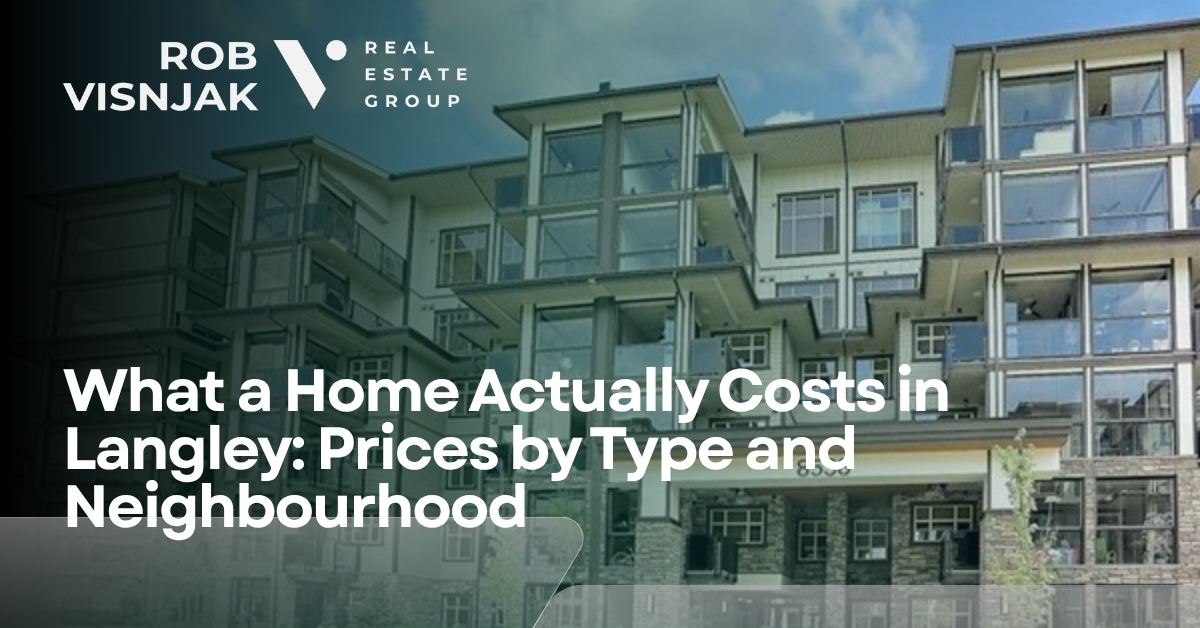
A typical Langley home does not cost one number. According to the Fraser Valley Real Estate Board August 2026 MLS Home Price Index, a typical detached house sat at $1,479,400, a typical townhouse sat at $806,400, and a typical apartment sat at $534,000.
Those three figures sit hundreds of thousands of dollars apart. Mix them into one average and you get a headline that does not match what a first-time buyer, a move-up family, or an acreage shopper will actually write on an offer.
This guide breaks Langley prices by housing type and neighbourhood using the August 2026 board file plus late-September MLS sold snapshots. If you are just starting, pair it with buying a home in Langley and the first-time buyer path.
Why One Average Price Misleads Langley Buyers
Late-September MLS snapshots put the 30-day average sold price across all Langley housing types near $919,568. That number is real, and it is still the wrong planning number for most households.
The mix of sales drives it. Willoughby townhouses and Langley City condos close in volume. Campbell Valley acreage and Fort Langley houses close in small counts at much higher prices. One expensive rural sale can lift a neighbourhood average without changing what a two-bedroom condo costs on Fraser Highway.
Use three layers instead. Start with the MLS Home Price Index benchmark for the housing type. Check the recent average and median sold price for that type. Then look at solds on the streets you will actually tour.
Langley Home Prices by Property Type
The MLS Home Price Index benchmark is the modelled price of a typical home of that type. It is not the average sale. Averages swing when one $2.2 million Campbell Valley house and one $480,000 Langley City townhome close in the same month.
August 2026 is the latest full Fraser Valley Real Estate Board month. Late-September 30-day averages sit beside those benchmarks so you can see how live solds compare.
|
Home type |
August 2026 benchmark |
Vs Aug 2025 |
Late-Sept 30-day avg sold |
|
Composite (all types) |
$948,600 |
-6.6% |
$919,568 |
|
Detached house |
$1,479,400 |
-7.1% |
$1,525,917 |
|
Townhouse |
$806,400 |
-5.0% |
$798,272 |
|
Apartment / condo |
$534,000 |
-8.8% |
High $500Ks mid-year |
Sources: Fraser Valley Real Estate Board August 2026 statistics package; late-September 2026 MLS sold snapshots for houses and townhouses.
Detached homes
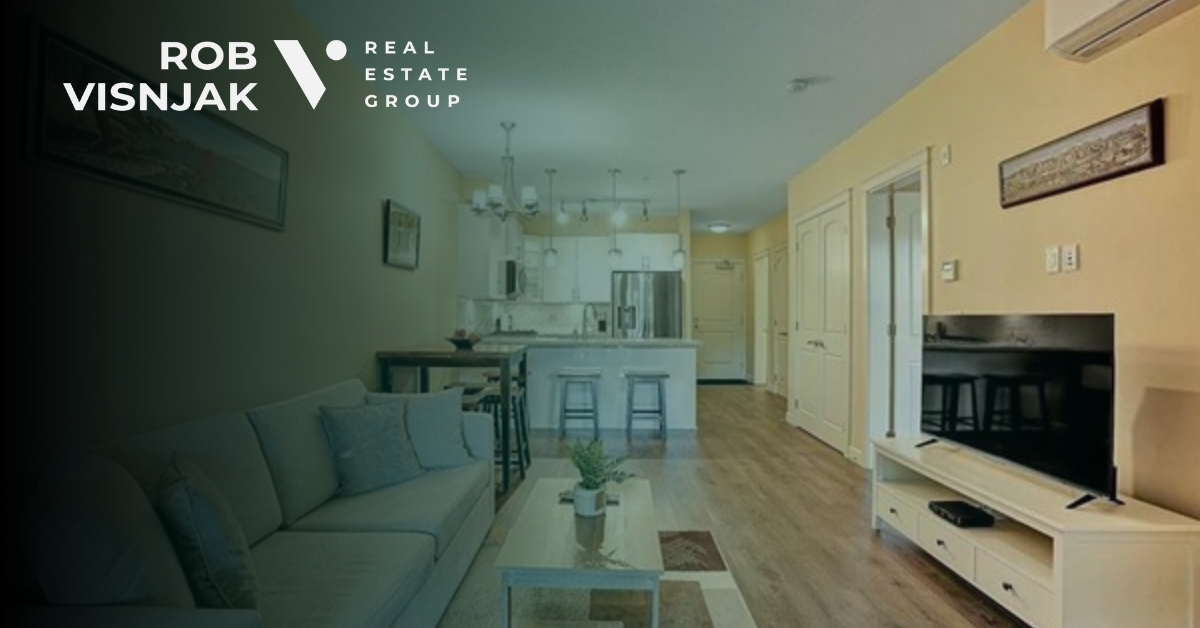
A typical Langley detached home cost $1,479,400 in August 2026. That is 1.4% below July and 7.1% below the $1,592,800 benchmark from August 2025.
The August median detached sale was $1,315,000. The average sale was $1,367,948. Both sat under the benchmark, which means many closed deals were cheaper than the index house.
Late-September detached solds averaged $1,525,917 across 30 sales, with about 39 days on market. That 30-day average sits above the August benchmark because rural and estate sales pull the mean up. Shop Walnut Grove or Aldergrove with street-level solds, not the $1.53 million snapshot.
Townhouses
A typical Langley townhouse cost $806,400 in August 2026, down 0.6% from July and 5.0% from $848,900 a year earlier. The August median sale was $792,500. The average sale was $807,346.
Townhouses remain the workhorse product for first-time buyers in Langley and for families leaving a condo. Late-September townhouse solds averaged $798,272 across 25 sales, with about 34 days on market and an 8.3% absorption rate.
Willoughby Heights still sets the tone. Newer three-bedroom rows there trade near $855,000. Older Langley City townhomes recently averaged about $590,000. That $265,000 spread is larger than most buyers expect when they search "Langley townhouse" as one product.
Condos and apartments
A typical Langley apartment cost $534,000 in August 2026. That benchmark was unchanged from July and still 8.8% below the $585,700 mark from August 2025. Condos have given back more year over year than townhouses.
June 2026 MLS solds averaged $527,179 across 78 condo sales, with 38 days on market. August board sales jumped to 65 apartment deals, up 35.4% from August 2025. Price relief arrived first. Volume is starting to follow.
Entry-level one-bedrooms still appear in the high $300,000s in older Langley City and Aldergrove stock. Two-bedrooms more often land between about $540,000 and $700,000 in newer Willoughby mid-rises. Compare the carrying cost against a townhouse in condo versus townhouse terms before you assume the cheaper purchase price is the cheaper home.
Langley City vs Township Price Gap
Langley is two municipalities. Langley City is the compact core around Fraser Highway. The Township of Langley wraps around it and holds Willoughby, Walnut Grove, Fort Langley, Brookswood, Murrayville, Aldergrove, and the rural south.
BC Assessment's 2026 notices, based on July 1, 2025 market values, put the median assessed single-family home at $1,406,000 in the Township and $1,207,000 in the City. That is a $199,000 gap on the typical house before anyone talks about lot size or school catchment.
Multi-family assessments, which bundle condos and townhouses, sat at $737,000 in the Township and $521,000 in the City. Assessor Bryan Murao said the 2026 roll reflected a softening market. Assessments are not sale prices, but they confirm the City's cheaper mix of attached housing.
Tax bills split the same way. A City purchase can look cheaper on both price and annual levy. Compare the two municipalities on the Langley page before you treat a $1.2 million City house and a $1.4 million Township house as the same product.
Home Prices by Langley Neighbourhood
Neighbourhood averages mix housing types. Willoughby's $761,907 late-September average is townhouse-heavy. Walnut Grove's $1,013,250 average is house-heavy. Use the type columns below, not the blended figure, when you set a budget.
Small samples matter. Fort Langley, Campbell Valley, and Salmon River often print two to four sales in 30 days. Treat those averages as a signal, then pull more months of solds before you write an offer.
|
Neighbourhood |
30-day avg sold (all types) |
Detached avg |
Townhouse avg |
|
Willoughby Heights |
$761,907 |
$1.34M |
$855K |
|
Walnut Grove |
$1,013,250 |
$1.20M |
$826K |
|
Langley City |
$679,647 |
$1.27M |
$590K |
|
Murrayville |
$808,680 |
$1.87M* |
$686K |
|
Brookswood |
$1,533,000 |
$1.53M |
Limited sample |
|
Fort Langley |
$1,600,000 |
$1.60M |
Limited sample |
|
Aldergrove |
$542,225 |
$999K |
$515K |
|
Salmon River |
$2,105,375 |
$2.11M |
Mostly acreage |
|
Campbell Valley |
$2,262,500 |
$2.26M |
Mostly acreage |
*Murrayville detached average rests on a very small late-September sample. Sources: late-September 2026 MLS neighbourhood snapshots.
Willoughby Heights
Willoughby is where most Langley buyers actually shop. Late-September snapshots showed 41 sales against 525 actives and a blended average sold price of $761,907, with about 27 days on market.
Detached homes there recently averaged about $1.34 million. Townhouses averaged about $855,000. Newer mid-rise condos more often sit in the mid-$500,000s to high-$600,000s rather than the City's older $400,000s stock.
The product mix explains the modest blended average. Willoughby prints more townhouse and condo deals than estate houses. Families priced out of Walnut Grove detached often land here on a three-bedroom row.
Walnut Grove
Walnut Grove trades like an established family suburb, not a new-build corridor. The late-September blended average was $1,013,250 across eight sales, with about 22 days on market.
Detached solds recently averaged about $1.20 million to $1.31 million depending on the sample window. Townhouses averaged about $826,000 to $871,000. Condos are thinner here; a recent 30-day condo average printed $497,500 on two sales.
Highway 1 access and school demand keep this pocket firmer than the Langley headline. Inventory still exists. Buyers who need a specific catchment should shop the solds on that street, not the $1.01 million blend.
Langley City
Langley City is the cheapest blended market in the two municipalities because the stock is condo- and townhouse-heavy. The late-September blended average was $679,647 across 17 sales, with about 42 days on market.
Detached homes still cost real money. Recent City house solds averaged about $1.27 million. Townhouses averaged about $590,000. Older condos remain the true entry ticket, often in the high $300,000s to low $500,000s.
The Surrey-Langley SkyTrain extension is the City's long-term price story, with a planned terminus in this core. That is a 2028-era catalyst, not a reason to skip building condition, strata minutes, or parking rules on a 2026 purchase.
Murrayville and Brookswood
Murrayville's late-September blend sat at $808,680 across five sales. Townhouses there recently averaged about $686,000. The $1.87 million detached print came from a thin sample and should not be treated as the typical Murrayville house.
Brookswood is the opposite mix. Five late-September sales averaged $1,533,000, and detached homes there recently averaged about $1.53 million. Larger lots and a quieter south-Langley feel pull families who want a house without paying Fort Langley or Campbell Valley money.
Fort Langley, Salmon River, and Campbell Valley
These are prestige and land markets, not first-time buyer markets. Fort Langley's late-September blend was $1,600,000 on two sales. Salmon River averaged $2,105,375. Campbell Valley averaged $2,262,500.
Days on market split hard. Some rural listings sit for months. A well-priced Fort Langley house can still move in under four weeks. If you are shopping acreage, ALR rules and what you can build matter as much as the sold price.
Aldergrove
Aldergrove is the Township's value pocket. The late-September blend was $542,225 across four sales. Townhouses recently averaged about $515,000. Detached solds printed near $999,000 in that window.
That combination is why Aldergrove keeps showing up on first-time buyer shortlists. You trade some commute convenience and amenity density for a lower ticket. Confirm school, transit, and renovation condition before you treat the $542,000 blend as the house you will occupy.
What Buyers Actually Budget Beyond the List Price
Purchase price is the starting line. The monthly number that matters is principal, interest, property tax, strata fees if any, utilities, and a reserve for maintenance.
A $534,000 condo with $400 a month in strata fees can cost more to carry than a $590,000 City townhouse with a lower fee and a parking stall included. A $1.48 million detached home adds a full exterior, roof, and yard budget that no strata covers.
|
Budget item |
What it does |
Langley range to plan for |
|
Down payment |
Sets mortgage size |
5% under $500K; 5%+10% above |
|
Property tax |
Annual City or Township levy |
City bills often lower than Township |
|
Strata fees |
Condo and most townhouse carrying cost |
Often $300 to $560 a month |
|
Home Owner Grant |
Cuts the tax bill if you qualify |
Higher grant if you meet age or disability rules |
|
Closing costs |
Legal, tax, inspection, adjustment |
Plan 1.5% to 3% on top of price |
If the monthly number is the constraint, run the file through mortgage and financing planning before you fall in love with a Willoughby row that qualifies on price and fails the stress test.
How to Read These Numbers Before You Shop
Start with housing type, not the Langley composite. A $948,600 benchmark is a blend. It does not describe a $534,000 condo or a $1.48 million house.
Then pick two or three neighbourhoods that match that type. A first-time buyer hunting a townhouse should compare Langley City near $590,000, Murrayville near $686,000, and Willoughby near $855,000. Those are different homes, different ages, and different monthly costs.
Pull live inventory on the Langley listing search and walk the solds from the last 60 to 90 days on the same street. A 30-day neighbourhood average with two sales is a clue, not a valuation.
When you want a number for one address, use a home value review or book a consult. Board averages will not price your strata parking stall, your south-facing yard, or your 2024 completion date.
FAQ
What is the average home price in Langley right now?
There is no single average that fits every buyer. The Fraser Valley Real Estate Board August 2026 composite benchmark for Langley was $948,600. Detached homes sat at $1,479,400, townhouses at $806,400, and apartments at $534,000.
How much is a detached house in Langley?
A typical detached home cost $1,479,400 in August 2026 on the MLS Home Price Index. Late-September solds averaged $1,525,917. Neighbourhood house averages recently ran from about $999,000 in Aldergrove to $1.20 million in Walnut Grove, $1.34 million in Willoughby, $1.53 million in Brookswood, and more than $2 million in Salmon River and Campbell Valley.
How much is a townhouse in Langley?
A typical townhouse cost $806,400 in August 2026. Late-September solds averaged $798,272. Willoughby townhouses recently averaged about $855,000, Walnut Grove about $826,000, Murrayville about $686,000, Langley City about $590,000, and Aldergrove about $515,000.
How much is a condo in Langley?
A typical apartment cost $534,000 in August 2026, down 8.8% from August 2025. Mid-2026 sold averages clustered near $527,000. Older Langley City and Aldergrove one-bedrooms still appear in the high $300,000s. Newer Willoughby two-bedrooms more often trade between about $540,000 and $700,000.
Which Langley neighbourhood is the cheapest?
On blended solds, Aldergrove and Langley City print the lowest averages because more condos and older townhouses close there. Aldergrove's late-September blend was $542,225. Langley City's was $679,647. Those figures are not detached-house prices. City houses still averaged about $1.27 million in the same window.
Is Langley cheaper than Surrey?
It depends on the housing type. Langley detached benchmarks have often sat near or below Surrey's more expensive town centres, while Langley condos can run above some Surrey apartment pockets. Compare current solds side by side rather than using one city headline. Start with Langley listings and Surrey listings.

Rob Visnjak Personal Real Estate Corp
Team Lead | ROB VISNJAK REAL ESTATE GROUP
or another way